
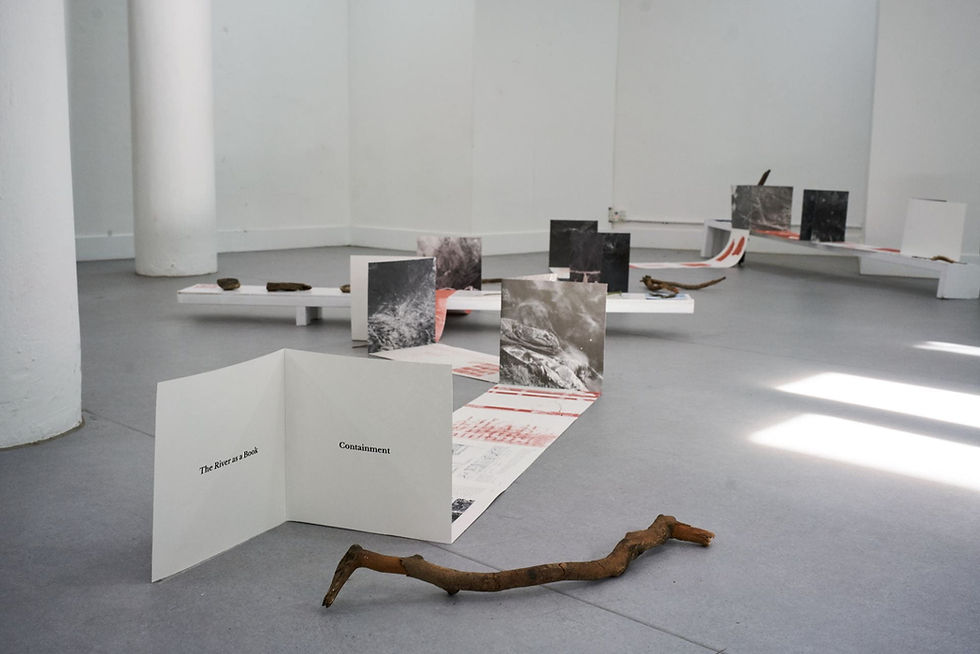
The River as a Book, 2025
Collaborative publication and installation
RCA Media Studies II
THE RIVER AS A BOOK
2025
Publication, archive, material
RCA Media Studies II · Collaborative publication
The River as a Book is a collaborative publication developed through RCA Media Studies II, exploring the Moselle Brook as both waterway and archive. Culverted beneath North London in the early twentieth century, the river persists below the contemporary city while its former landscapes survive through archival photographs and material traces.
My contribution, Counterflow, forms the third chapter of the publication. Through archival research, material collection and image-making, the work explores how a river rendered physically invisible might disrupt the fixed historical narratives through which it is remembered.
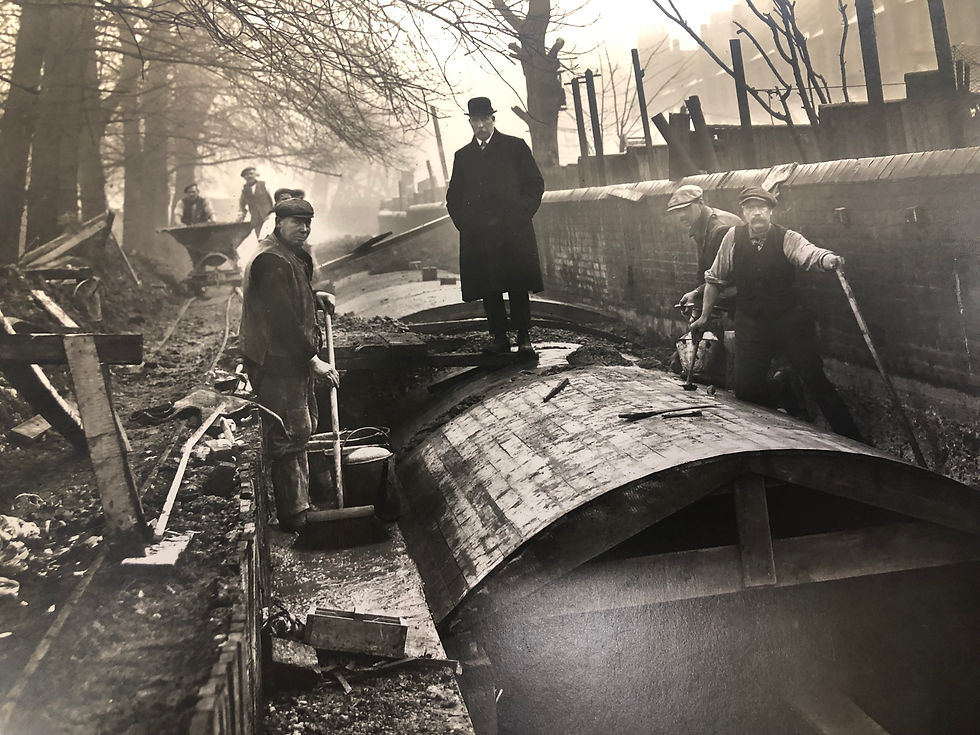
Culverting the Moselle Brook, c.1906
Archival photograph · Haringey Archive Service
THE CULVERTED RIVER
The Moselle Brook once flowed openly through the landscape of North London before sections of the waterway were progressively culverted beneath the expanding city. Archival photographs document this transformation, recording the moment at which a living watercourse was converted into subterranean infrastructure. The river remains in motion below ground, while its visible history survives principally through the archive.

Construction of the Moselle Culvert, c.1906
Archival photograph · Haringey Archive Service

Moselle Brook Culvert, c.1906
Archival photograph · Haringey Archive Service
COUNTER-FLOW
Individual Contribution
Rather than treating the archive as a fixed record of the river's disappearance, the chapter Counterflow returns these images to the landscape they describe. Archival photographs were physically submerged in the Moselle, allowing water, sediment and movement to alter their surfaces. The river becomes an active participant in the archival process, obscuring the image while producing another form of record.

Returning the Archive to the River, 2025
Submerged archival photograph · Counterflow

Counterflow: River Fragments, 2025
Archival images UV-printed onto found material
Moselle Brook
Fragments collected from the river were brought into the project as material evidence of the Moselle itself. Archival images were transferred onto their surfaces using a UV flatbed printer, moving the historical image from paper onto matter recovered from the river. Each object becomes both found fragment and archival artefact, converging into a site where image, material and water intersect.
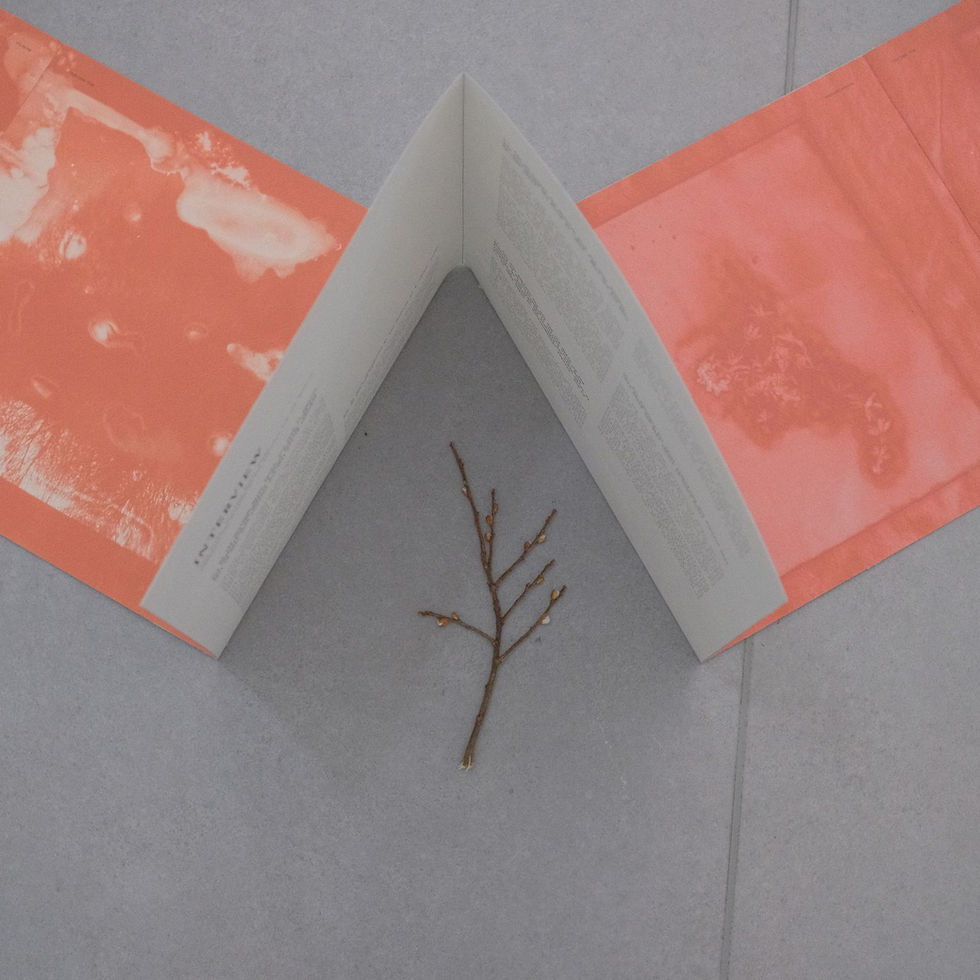
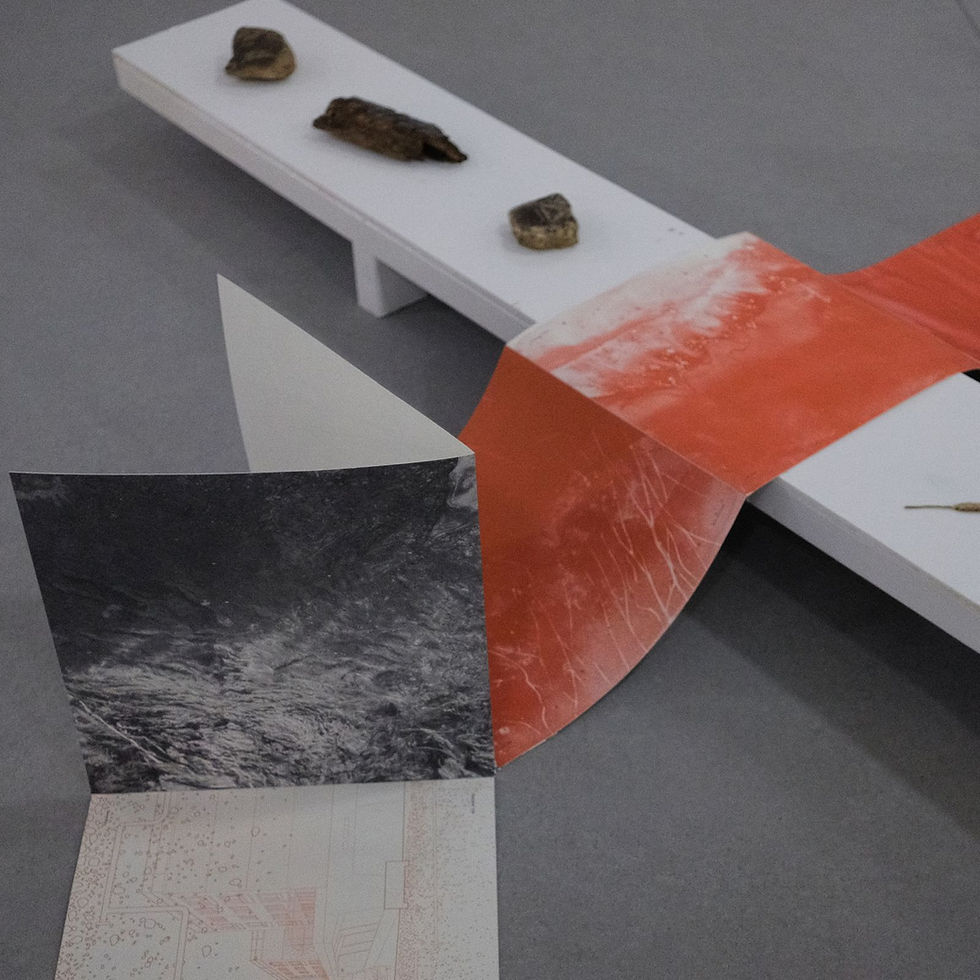
The River as a Book, 2025
Publication detail · RCA Media Studies II
THE RIVER AS A BOOK
The group's individual investigations were brought together to form a shared publication in which the river operates as both subject and organising structure. Rather than containing research within a conventional bound volume, The River as a Book unfolds as a continuous spatial sequence, allowing different histories, materials and representations of the Moselle to intersect.
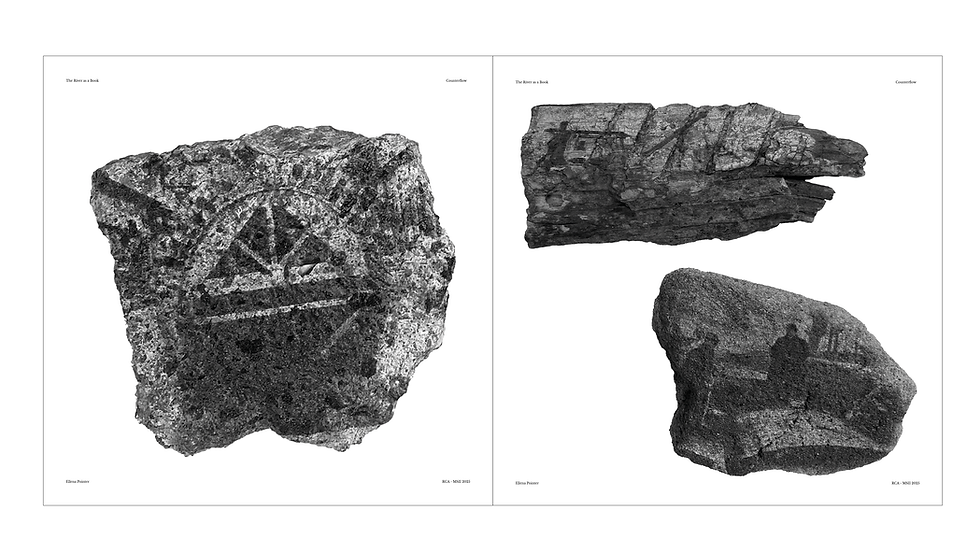
'Counterflow' within The River as a Book, 2025
Publication and found river artefacts
RCA Media Studies II
Selected References
Caycedo, C. (2012–ongoing). Geo-choreographies.
da Cunha, D. (2019). The Invention of Rivers: Alexander's Eye and Ganga's Descent. Philadelphia: University of Pennsylvania Press.
Haringey Archive Service. Moselle Brook archival photographic collection. Bruce Castle Museum, London.
Special thanks to Haringey Archive Service for hosting our archival research visit and for permission to reproduce material from their collection.